Masaco de yuca is traditionally eaten in the afternoon at tea time. In Eastern Bolivia, especially in Santa Cruz, Bolivians favor salty food to sweet when accompanying their tea or coffee, even in the morning.
Ingredients
1 pound of pork chicharrón (grilled or roasted pulled pork)
3 large (or long) yucca roots
1 cup of shredded mozzarella cheese (optional)
Salt to taste
Instructions
Probably one of the easiest recipes you can make. Peel your yucca roots with a knife (or purchase them canned, already peeled). Wash and slice them into chunks (it doesn't have to be pretty, this is just to help them cook faster than cooking them whole). Boil them for about 30 minutes or a little longer, in a deep with plenty of water (enough to cover all the yucca pieces), until they are completely soft. Drain and set aside.
Now, normally chicharrón is fried, grilled or roasted pork. We will be using shredding the pork into pieces (some with and some without pork rind) but you have to have some rind, that's the flavor secret. Some people call this pulled pork. We will NOT be using the "Cheetos" type, deep fried, puffy, crunchy snackfood pork rinds you find in a package in the potato chips isle.
Fry your pulled pork along with some of the pork rind in a bit of oil until it is fully cooked. You might ask yourself why fry pork in oil when it's already kind of greasy. The answer is, the pork has to be completely cooked and toasty all the way through. Basically, you want your pork to be very thoroughly roasted, and if you prefer, you can actually roast your pork in the oven rather than frying it, but you will want it to ultimately be somewhat greasy (there's a reason for this).
When you've finished roasting your pork, cool it until it is cool enough to handle and begin ripping (pulling) the pork into small pieces. Do not discard the pork fat or grease that remains behind. Set your pork aside when you're done shredding it.
In the center of the yucca pieces you will find a sort of string-like root, similar to a candlewick. If you pull on it, it should remove easily and you can then discard it. Then mash the yucca until the texture is similar to mashed potatoes.
When your yucca is completely mashed and soft, add the shredded (pulled) pork to the yucca and mix it well.
When you've finished adding the pork meat, add just a little of the pork fat (about 1-2 tablespoons) to the yucca and meat and knead the mixture with your hands until everything is completely mixed. If necessary add salt to taste.
If it is too dry, add a little more pork fat, just a little bit at a time. The secret is for the masaco not to be or taste at all oily, but not to be at all dry either. The mashed yucca is fairly dry and should absorb most of the pork fat. Ultimately, it should just be smooth.
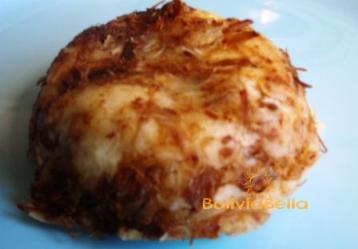
You have just made masaco de yuca! Scoop the masaco into small cups or bowls and press it down firmly. This is just to give it a shape. Then turn them over and empty them out onto a small plate and serve.
OPTIONAL: Some people place a little pinch of shredded cheese into the cup before they fill it with the masaco. Then, when the cup is flipped over, the cheese is on top.
Usually masaco is served warm, but you can also enjoy it cool. If you must reserve and refrigerate it, cover it or the yucca will dry out. Serve with tea or coffee.