|
Bolivia Climate - Weather in Bolivia The weather and climate in Bolivia vary as greatly as the country's many regions, although when speaking of weather, Bolivians typically refer only to two seasons (the rainy season and dry season) as usually there is no gradual entry into, or exit from, either winter or summer. Changes in temperatures and the weather in Bolivia are typically as brusque as the changes in topography from one region to the next. Throughout Bolivia, temperatures depend primarily on elevation.
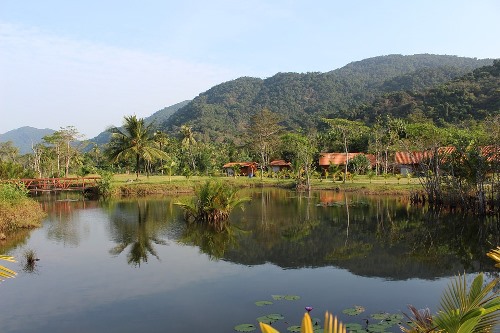
Tropical Lowlands: To the East (from Pando, down through Beni and Santa Cruz to parts of northern Tarija) the Bolivian climate is usually very hot, humid and often rainy between late September and May. December and January are the hottest months of the year. Summer days are humid and sticky. Nights are warm and musky, often filled with a moist fruity aroma as winds carry the scent of the tropical jungle into the cities. More than any other month, August tends to be specially windy. Because this is also the month for “chaqueos” (“slash and burn” land clearing techniques used in northern Bolivia to clear forested areas), the August winds Southward, often filling cities like Santa Cruz with smoke. At times it is so thick that visibility is near zero and driving becomes very difficult. Many people suffer from respiratory problems. Just prior to this, in May, June and July, strong and intensely cold polar winds blow North from Patagonia, Argentina bringing bracingly frigid weather to otherwise tropical Bolivia. Called “surazos” by locals in Bolivia, these southern winds cause sudden temperature drops of anywhere from 10-40ºF overnight. These are often accompanied by rain, making for very chilly weather. Because in this region the climate is typically humid, it may feel even colder than it actually is and people complain of feeling “chilled to the bone” although temps come almost never dip below freezing (32ºF).
Northwest Valleys: The country’s northwest valley region (called the Yungas, or the jungles, North of La Paz going toward Pando) is surprisingly hot and humid, considering the altitude. It is the cloudiest, rainiest and most humid region of Bolivia. In this region the Bolivian climate and local weather are similar to that of the eastern lowlands of Santa Cruz with even more precipitation per year. Temperatures drop as the elevation increases. At altitudes higher than 2000 meters above sea level it sometimes snows and at 4600 meters the mountains are permanently capped by snow. Above 5500 meters the climate is similar to that of polar regions and there are some glaciers present. Central Valleys: The central valleys - Cochabamba, parts of Chuquisaca and western Tarija - are temperate to cool. Temperatures are pleasant during the day, varying between 60-80ºF but it can get very cold at night, dropping to 30-40ºF. This region, although high (averaging 1200-1500 meters above sea level, or about as high as Denver, Colorado) is also rather humid. Bolivia’s valleys are very fertile and covered in dense forest. The rainy season is long and sustained. It is always a good idea to dress in layers in this region as the climate changes quickly. During the day one can feel quite warm, but by the late afternoon a sweater or jacket are often necessary. During the winter a heavy coat, gloves and a hat are advisable, although it doesn’t get as cold as the winters in North America and Northern Europe. It rarely snows here.
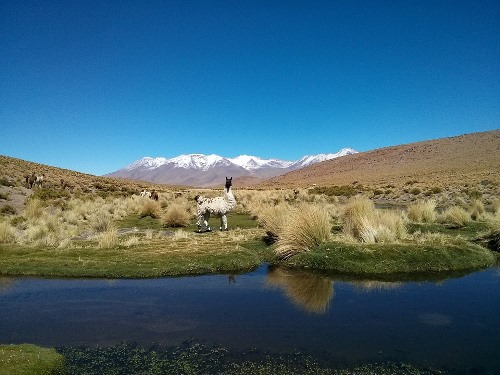
Andes Mountain Highlands: On the shores of Lake Titicaca, and higher (Potosí), temperatures can reach a balmy 80ºF at midday, but normally by early afternoon a sweater is necessary and the nights are cold. Because of the altitude, the sun feels especially strong here and sunscreen should be worn throughout the entire day. On the Altiplano the winds are cold and harsh and moisturizer or sunscreen (and lip balm) are important to prevent both sunburn and windburn. (Note: In the Salar de Uyuni visitors frequently get sunburned. The sun reflects very strongly off the stark whiteness of the expansive salt beds, not unlike the type of sunburn people get in very cold, snowy regions). Again, it is advisable to dress in layers. Special Note on La Paz: Visitors to the city of La Paz should be aware that the altitude drops more than 3000 feet between the northern and southern parts of the city. Temperatures at the airport can be much colder than downtown which, in turn, can vary greatly from the southern residential areas. The southern area of the city can be usually quite a bit warmer. Road Conditions: Travelers should stay informed on road conditions in Bolivia throughout the year, especially during the Bolivian rainy season when some roads become inaccessible, landslides are more frequent, and rivers swell, sometimes flowing over bridges, making crossing impossible. Reversed Seasons in Bolivia: Travelers arriving from the Northern Hemisphere should keep in mind that in the Southern Hemisphere seasons (and climate) are reversed, or the “opposite” of those in the North, with the hottest months (our summer) being November to February and the coldest months (our winter) being May to July. Weather Forecasts for Bolivia's Major Cities You can also visit the website of the Bolivian National Meteorology and Hydrology Service SENAMHI for real time local weather conditions and forecasts in dozens of Bolivian cities plus real time flood alerts.  |