|
Marsh Deer: Largest in South America The marsh deer (Blastocerus dichotomus) is the largest deer in South America. Adults can grow to be 2.10 meters tall and weigh 150 Kilograms (330 pounds). Antlers on the males can be up to 60 centimeters (23.6 inches) in size. Females are smaller and so are their antlers. Both have rather long, thick, reddish-brown fur over most of their body, but on their legs it is black.
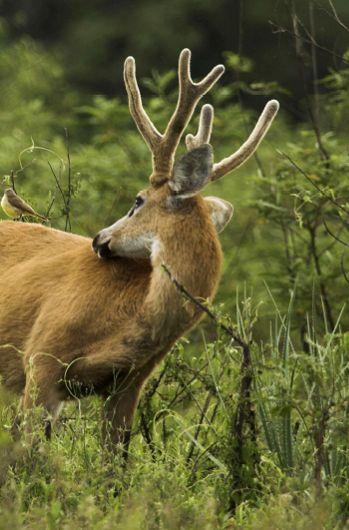
Marsh deer can be found in an area near the edge of the pantano (wetlands) where the forest begins. They are herbivores and eat leaves, grass and aquatic plants. They rarely travel in herds and usually travel alone or at the most with a mate. They do this in order to eliminate competition for food and ensure enough food for themselves. They usually leave the forest at dawn and at dusk, when there is less danger of predators, to search food on the savannah and drink water. They only enter very open spaces during the night or daytime when they sense there is no danger. Marsh deer have a rare type of hoof. An elastic webbed skin grows between their two toes. This helps them walk through the marshes without sinking into the mud. Females normally have one fawn per year and their reproduction period is usually between May and October. Fawns are born after a 9-month pregnancy and when they are born they look very much like their mother – they don’t have spots. Most of the deer of this species were, until now, found in the Pantanal eco-region; however, some also inhabit parts of Southeastern Peru, Paraguay, and Northern Argentina. Unfortunately, in Uruguay they’ve already been declared extinct. 
Because they are such imposing animals hunters frequently hunt them simply for sport and collect their antlers. They also run the risk of contracting diseases from cattle, and are often the victims of forest fires started by humans who practice slash-and-burn land clearing techniques for farming. Click the panda to return to our wildlife home page.     |