|
History of Bolivia: Ancient History Research on South American ancient history tells us the Andean region has been inhabited for approximately 21,000 years. The altiplano (highlands west of La Paz) was inhabited by the Tiahuanacotas beginning about 2200 years ago (some sources state 600 B.C.), when they settled near the southern end of Lake Titicaca. The city of Tiahuanaco was colonized and functioned as an important center for trade and religion. The empire expanded rapidly through the year 1000 A.D., then disappeared just 200 years later around 1200 A.D. (it is believed they were conquered by the Aymara), leaving behind traces (and ruins) of its greatest city, Tiahuanaco.
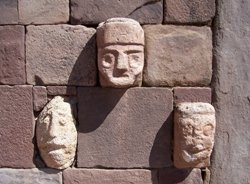
There is historical evidence they used advanced architectural and agricultural techniques and were in contact with other cultures such as the Nazcas, which inhabited what is Peru today. Today, Tiahuanaco is one of the most popular tourist attractions for visitors interested in archeology and history in the highlands of Bolivia, just a few hours by road from La Paz. The Mollos inhabited an area North of present-day La Paz, while at about the same time, the Moxos were present in the eastern lowlands of Bolivia. Both societies were agriculturally advanced and disappeared around the 13th century, at roughly the same time as the Tiahuanaco Empire vanished from the historical timeline. With the fall of the Tiahuanacotas came the rise of the Incas and Aymaras. The Aymara were warriors and lived in strongly fortified towns on hilltops around Lake Titicaca. They formed seven regional kingdoms and adapted very well to the region despite its difficult climate and used irrigation systems to increase their food supply. To increase storage times, they froze and dried their crops as well. They also colonized areas of the semi-tropical central valleys on the eastern slopes of the Andes producing both tropical and highland crops. The Aymara eventually overtook another major ethnic group, the Urus who were reduced to poor fishermen and landless workers.
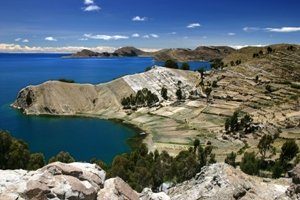
The Incas had a highly advanced and socially organized culture. Their civilization was carefully managed by a government structure as well. They created a system of roads, aqueducts and hanging bridges, some of which still exist today. Their system of aqueducts allowed them to discontinue their nomadic lifestyle and become the agricultural and militaristic masters of the region. The Incas did not change the organization of the Aymara kingdoms, and generally allowed them to be autonomous. In fact, most local governors kept their positions, answering to the Inca, and members of the Aymara elite were allowed to keep private property and send their children to schools in Cuzco, Peru, the center of the Incan Empire. However, in 1470 two Aymara kingdoms rebelled against the Inca and were thoroughly defeated. After that, the Inca fully established their rule over the Aymara and the entire Kollasuyo region. The Inca were not successful in overtaking other cultures in the eastern lowlands of Bolivia and the ruins that remain of the Incan empire in this region are evidence of that. Today, the indigenous cultures of eastern Bolivia live in much the same way as they did hundreds of years ago. On Lake Titicaca tourists can cross the lake from Copacabana to the Islands of the Sun and the Moon to view Incan Ruins. Today Quechua and Aymara are still spoken by a large part of Bolivia’s population and are 2 of Bolivia's over 20 official languages.
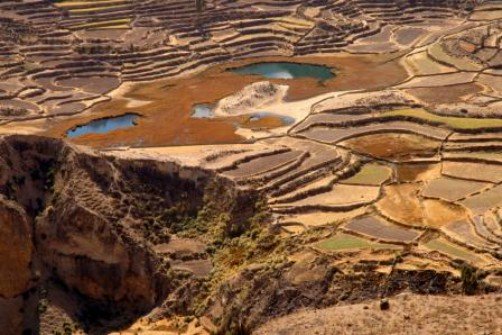
They may be best known for their field "terracing" system (photo) in which they cut stair-like fields into the sides of hills. This reduced the effects of wind erosion and eliminated run-off ensuring rainwater was retained in the soil. This agricultural practice is still in use today. The Incas also built amazingly durable temples and towns, the ruins of which can still be seen today throughout historical sites in Peru and Bolivia. They imposed their medical and surgical practices, construction and art forms, rituals, dance and music upon all other cultures they conquered. Now read about the Colonial EraBolivia's Colonial Era (1500-1800 A.D.) Pando La Paz Oruro Potosí Chuquisaca     |
 The Quechua-speaking Incas entered the Altiplano in about 1450 A.D. conquering and assimilating other cultures including the Aymaras, bringing with them their traditions and customs, and controlling this area for about 75 years until 1525 when the Spanish arrived in search of gold and silver. The Incan Empire was divided into four major administrative units. The Bolivian highland region, which they called the Kollasuyo, became one of those four units ruled over by a high official who answered only to the Inca himself. (This is why today, people from La Paz are referred to as "kollas"). This high official in turn supervised several provincial governors who controlled members of the Aymara nobility. Throughout this time in history the Incas forced local natives to work in their mines or on their construction projects, or to serve in their armies by means of a forced draft called the "mita" system (although they were fully compensated for all work they did).