|
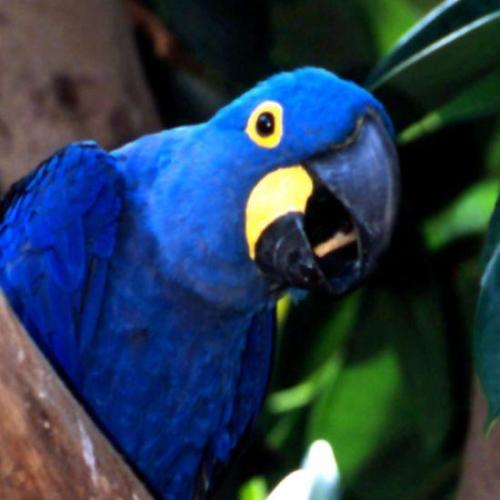
Bolivia's Blue Paraba Faces Extinction The (Anodorhynchus hyacinthinus or Hyacinth macaw), is known as the emblem of the Pantanal in Bolivia because of it's beauty. The Pantanal is one of the world's largest wetland areas. Unfortunately, people also love their feathers and frequently kill parabas and use their feathers to make handcrafts and traditional costumes. In addition, their habitat is suffering as more and more trees are felled or burned down. Blue parabas are under serious threat of extinction.
Photo © Roger LEGUEN and Text WWF. All Rights Reserved
Did you know that blue parabas only build their nests in ONE type of tree? The Sujo tree (Sterculio apelata) has very soft wood. Parabas dig holes in the tree that sufficiently large for them to nest. Females normally lay two eggs, similar to chicken eggs. After laying her eggs, the female remains in the nest immobile for 28-30 days until they hatch. During this time the male brings her food. When born, paraba chicks are very fragile. Cockroaches and ants are a threat to them. Frequently only one survives. Parabas are good parents. Both the male and female take care of the chicks, especially during the first three months as the chicks depend completely upon food brought to them by their parents during this time. 
At three months of age the chicks begin to practice flying, taking shorts flights each time and continue to be fed by their parents for another six months. Parabas eat the insides of coconuts, the fruit of the Totaí tree (Acrocomia aculeata), and the fruit of the Motacú tree (Attalea phalerata) and can weigh up to 1.3 kilograms (2.86 pounds). Click the panda to return to our wildlife home page.     |