|
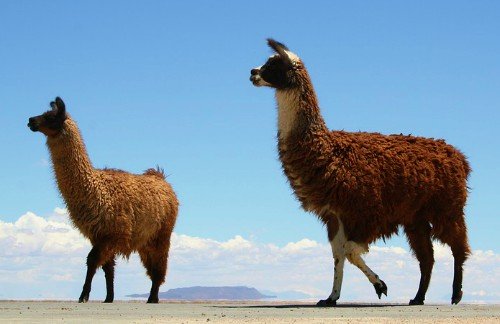
The Llama: National Animal of Bolivia The llama is a camelid. This means it's related to camels, although it doesn't have humps. It is also more closely related to the alpaca, vicuña and guanaco (all are camelids). These camelids are native to the Andean region of South America and can be found in Bolivia, Peru, Chile, Ecuador and many other places along the Andes Mountains and highlands.
They are very tough animals and the Incas used them as pack animals for thousands of years because they are very strong and surefooted on the rocky paths of the mountains and can carry very heavy loads. Their wool is used for making woven Bolivian clothing like sweaters, gloves, winter caps, and coats because it is very thermal. The only problem is, when it gets wet is smells really bad. It also shrinks so you can NEVER put a wool sweater in the dryer. Here in Bolivia some people also eat their meat. It is used in certain traditional dishes and is also ground like hamburger meat. Llamas have been a part of Andean and Incan culture for thousands of years and the Aymaras and Quechuas use them in their rituals too. For example, when they build a new house or building they bury an unborn fetus under the cornerstone of the new house that will be built. They believe that by giving Mother Nature (they call her Pachamama) the fetus she will bring them health, wealth, happiness and safety in their new house or building. These animals, their wool, and their fetuses are also used in many other rituals by curanderos (medicine men - it means "healers") and kallawayas, who are like soothsayers and historians all in one. Llamas are kind of moody. They can kick really hard and can also bite, and if you make them angry they spit this disgusting gooey stuff at you that's kind of green so you have to be careful about getting too close to them. Did you know that llama and alpaca fibers are supposedly fireproof? About Alpacas, Vicuñas and GuanacoAlpaca are slightly smaller and more stout than llamas. Their snouts and necks are shorter. But their wool is much more luxurious. It is actually so fine, so warm and so waterproof that it is considered a fiber, not wool. It is also considered better quality than cashmere. Alpacas are bred in Bolivia for their fibers more than anything and are not used as pack animals so much any more because their fiber has become so valuable.
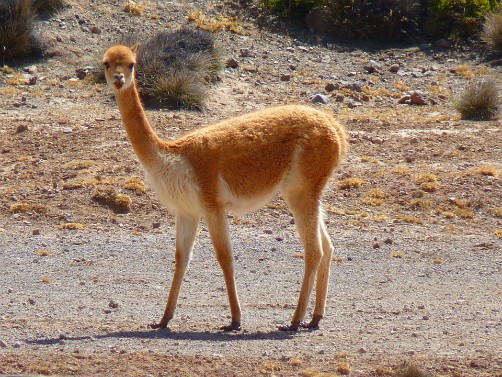
Vicuñas (pictured above) and guanaco are very rare and hard to find in the wild. They are much smaller and thinner and both are endangered, especially the guanaco. Vicuñas are the third in size of these four animalas and guanacos are the smallest of all. They are both very fragile animals and it's becoming harder and harder to see one, except in a zoo or when families breed a few.     |