|
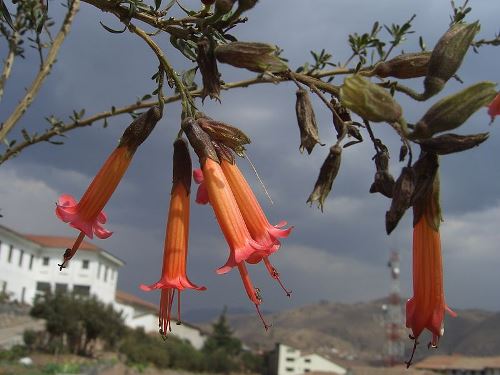
Bolivia Facts: Legend of the Kantuta The kantuta (also spelled cantuta) is one of Bolivia's national flowers, or floral emblems (the other is the patuju). It is sometimes called the Sacred Flower of the Incas, and this is the legend told by the Quechua, descendants of the Incas. The name comes from the word "qantuta" in the Quechua language. It's scientific name is Cantua buxifolia. Bolivia also has a second official national flower called the "patujú". Click here to read more about Bolivia's two national flowers.
The Bolivian National Flower: Kantuta
It is said that long ago lived two Incan kings, Illimani and Illampu. Both were wealthy and each owned vast quantities of land in the Kollasuyo (now the Altiplano, or Bolivian highlands in Western Bolivia). Each also had one son. Jealous of each other's wealth, one of the kings mounted an attack against the other and during combat, each was mortally wounded. Although both of their sons had been against the war to begin with, upon their death beds each made their son promise to avenge their death by warring against each other. Bound by their promises to their fathers, a second battle ensued and this time, as history always repeats itself, the sons each mortally wounded the other. However, unlike their fathers, before dying the princes forgave one another and made their servants promise to bury them side by side on the battlefield. Pachamama (known as Mother Earth or Mother Nature, and sometimes referred to as the Goddess of Fertility) appeared to the princes before they died. She told them they should not be punished for their fathers’ wrongdoing. So she caused the stars of their fathers to fall from the sky. Upon crashing to the earth they formed the snow-covered mountains you can still see on the Altiplano today, which have been named Illimani and Illampu, and are the two highest mountains in the region. It is said the rivers that form when their snow caps melt are actually their tears of regret and these fertilize the valleys where the cantuta now grows. The Kantuta is considered a symbol of unity because its two primary colors (red and yellow) were the colors used by the king’s sons. Green is the color of hope. (Contributed by Maira of Austin, TX).     |